
How Exhibition Stands Influence Brand ROI at Trade Shows
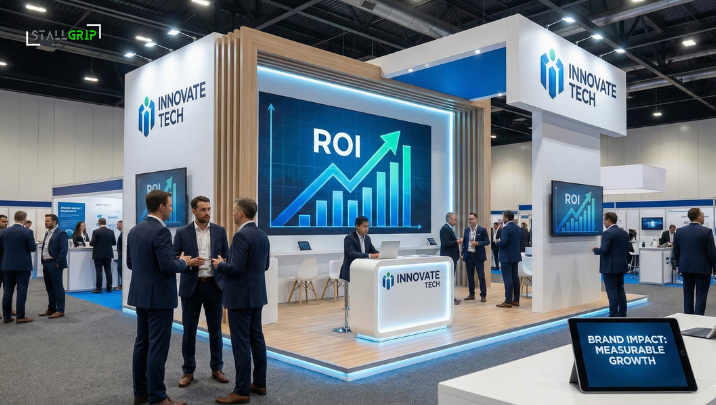
Trade shows have become one of the most powerful platforms for brands to connect directly with their audience, showcase innovation, launch new products, and build strong B2B relationships. But participating in an exhibition is not just about booking space—it’s about how effectively a brand uses that space to convert footfall into leads and leads into measurable revenue.
This is where the exhibition stand plays a decisive role. The design, layout, structure, branding, lighting, and overall experience of a booth can significantly influence how visitors perceive the brand and whether the brand achieves a strong return on investment (ROI).
In this detailed article, we will explore how exhibition stands shape ROI and why brands must treat their stall as a high-impact marketing asset rather than a simple event requirement.
1. First Impressions Drive Visitor Footfall
At any exhibition, there are multiple brands competing for attention. Visitors walk through long aisles filled with stands, lights and marketing messages. In such a crowded environment, the first impression becomes the ultimate differentiator.
A well-designed exhibition stand instantly communicates:
Brand identity
Value proposition
Product offerings
Professional credibility
Studies show that visitors form an opinion about a booth within 3–7 seconds, and this quick judgment decides whether they will step inside or walk past. An attractive stand increases footfall because humans naturally move toward visually appealing, clean, and well-lit spaces.
Elements that boost first impressions include:
Bold and meaningful graphics
Clear messaging visible from a distance
Eye-catching lighting
Strategic use of brand colors
Proper spacing to avoid clutter
A brand that commands attention in the first few seconds automatically improves its chances of generating higher leads.
2. Stand Layout Directly Influences Engagement
While aesthetics help in attracting visitors, the internal layout influences how long they stay and how deeply they engage.
A poor layout results in:
Visitors feeling lost or uncomfortable
Blocked entry and exit points
Congested product areas
Reduced interaction with staff
Less time spent inside the booth
But a well-thought-out layout creates a natural flow that guides visitors without overwhelming them. Open designs encourage people to walk in freely, while strategic placement of products highlights the brand’s priorities.
Engagement-focused layout features include:
Open front without barriers
Clearly defined product demo zones
Quiet corners for discussions
Interactive screens placed at eye level
Smooth walking flow
The more comfortable and organized the booth feels, the more time visitors spend exploring. More time = deeper engagement = higher conversion potential.
3. Clear Branding Enhances Recall and Decision Making
Most decisions at trade shows don’t happen on the spot. Buyers compare multiple brands, collect brochures, talk to representatives and revisit options after going home.
This is where brand recall becomes essential.
A professionally branded stand ensures that:
The visitor remembers the brand even after leaving the event
The company looks trustworthy and well-established
Marketing messages stay in the buyer’s mind for days or weeks
Consistency in design—colors, typography, logos, taglines—helps create mental anchors.
When these anchors are reinforced through a well-built stand, a visitor automatically recalls the brand during decision-making.
Good branding also affects emotional response. A premium-looking stand makes the brand appear more capable, reliable and technologically advanced.
4. Experience-Based Stands Create Higher ROI Than Static Designs
Today’s exhibitions are no longer about simply showing products. They are about creating experiences.
Brands that deliver experiential engagement gain a competitive advantage because visitors remember how the booth made them feel. That emotional memory translates into better conversions later.
Experience-driven elements include:
Live product demos
Touch-and-feel zones
VR/AR experiences
Product testing counters
Interactive screens or quizzes
Small experiential activities
When visitors engage physically or interactively with a brand, the brand occupies a deeper space in their memory. This increases both lead quality and conversion rate.
A static stand provides information.
An experiential stand creates impact—and ROI grows significantly with impact.
5. Efficient Stall Construction Reduces Hidden Costs
An often-ignored factor in ROI is operational efficiency. A poorly designed or poorly constructed stand leads to hidden expenses such as:
Last-minute carpentry fixes
Electrical corrections
Material wastage
Excess labor
Additional installation time
Damaged materials requiring replacement
These costs add up silently and reduce the brand’s overall return.
On the other hand, a professionally executed stand ensures:
Faster installation
Better material durability
Minimum wastage
Smooth electrical and AV setup
Lower transportation hassle
Easy dismantling after the event
Operational efficiency may not be visible, but it massively impacts ROI by preventing unnecessary expenditure.
6. Photography, Reuse, and Long-Term Marketing Value
Many exhibitors assume that the stand’s value ends when the exhibition ends.
In reality, a high-quality stand provides long-term benefits, such as:
Reusability
Modular stands can be reused for multiple exhibitions, reducing cost per event.
Marketing Content
A beautifully designed stall becomes a marketing asset:
Website showcase
Social media posts
Brochures and presentations
Client pitches
Brand portfolio
Brand Positioning
When potential clients see strong visuals of past stalls, their trust increases dramatically.
Good photos and videos taken during the exhibition continue to boost brand credibility throughout the year.
Thus, the ROI of a well-designed stall extends far beyond the event.
7. Lead Quality Improves When the Stall Communicates Value Clearly
Many brands focus on collecting a high number of leads, but lead quality matters more than lead volume.
A well-branded, intelligently structured stand naturally attracts:
Decision-makers
Buyers with real intent
Influencers and industry professionals
Visitors who resonate with the brand’s design and message are often those who align with the brand’s business goals.
When such people interact with the staff, the chances of closing deals increase significantly.
Thus, a stand that communicates value clearly helps in generating high-quality leads, which ultimately boosts ROI.
8. The Human Element: Staff Performance Improves With a Good Stand
A booth that is comfortable, well-ventilated, spacious, and professionally designed boosts the confidence of the staff inside.
Confident staff = better conversations = better conversions.
When the environment supports them—through good lighting, clear messaging, comfortable meeting spaces—the staff can perform at their highest potential.
This indirectly but significantly improves ROI.
Conclusion
Exhibition stands are not just physical structures. They are strategic marketing tools that influence footfall, engagement, brand recall, lead quality, staff performance, and long-term brand value.
Inspired by this read?
Let's turn these insights into your next big exhibition success. Our team is ready to bring your brand to life with stunning 3D designs.